

Regular gentle cleaning helps bathroom tiles and grout stay looking their best. The right method depends on the material: a cleaner suitable for glazed porcelain may damage marble, shell or a coated metal finish.
Before starting, identify your tile and grout, read their care instructions and test any unfamiliar cleaner in an inconspicuous area.
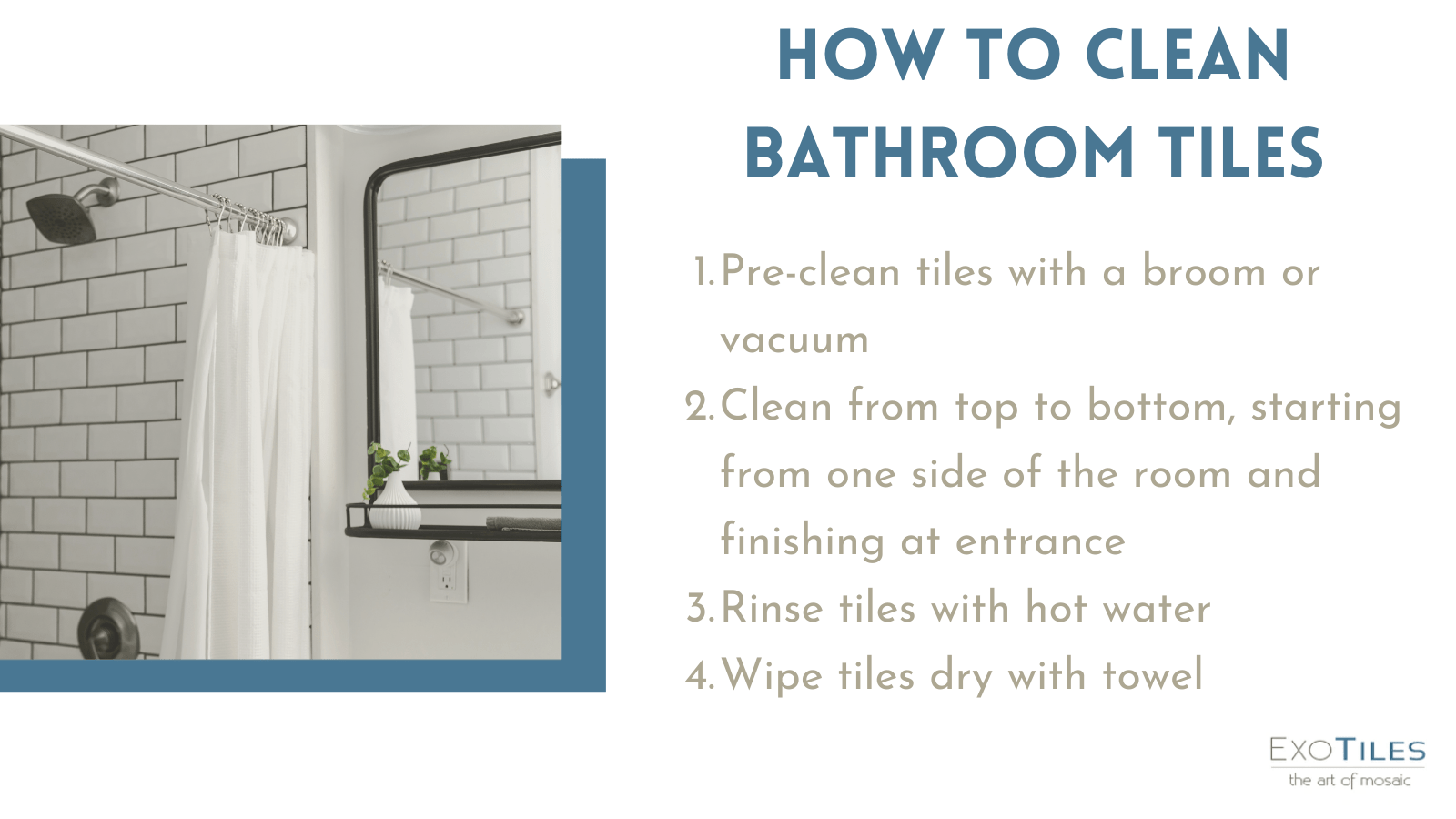
How to clean bathroom tiles: a simple routine
1. Remove loose dirt
Sweep or vacuum floor tiles using an attachment that will not scratch the finish. Dust wall tiles with a soft cloth. Removing grit first helps prevent it being dragged across the surface.
2. Use a compatible mild cleaner
Choose a pH-neutral cleaner approved for both the tile and grout, diluted as directed. Use a soft cloth, sponge or compatible soft brush. Work from higher surfaces downwards and clean the floor towards the exit.
3. Rinse and dry
Remove residue with clean water as directed, avoiding unnecessary flooding. Dry with a soft cloth or suitable mop and keep people off wet floors until they are safe to walk on.
How to clean grout between tiles
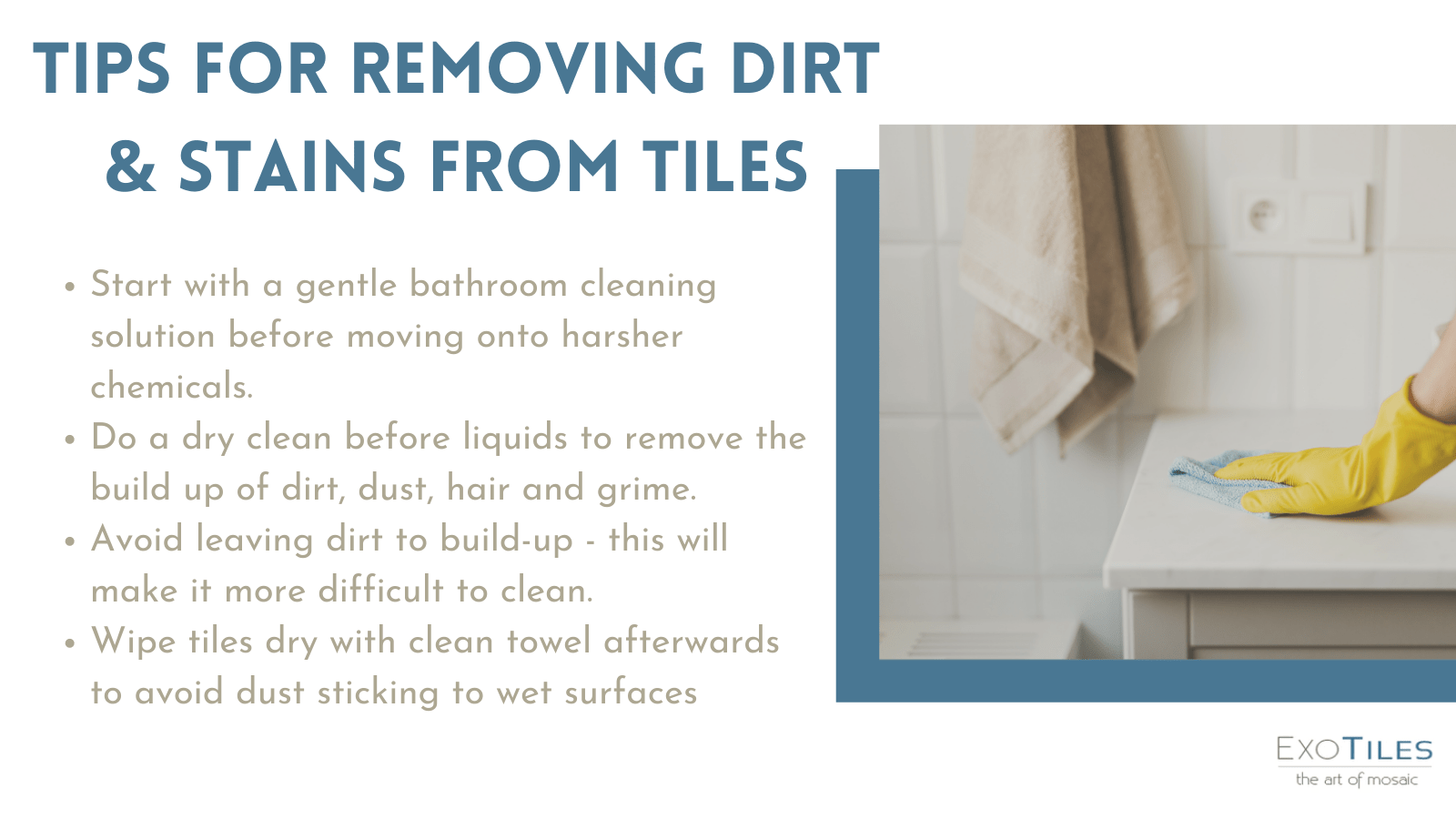
Start with the grout manufacturer's recommended cleaner and a soft brush that is also safe for the surrounding tiles. Rinse away residue rather than allowing dirty solution to dry in the joints.
Grout types have different care requirements. Epoxy still needs routine cleaning, while some cement-based products may have sealing instructions. For persistent staining, ask the supplier for a compatible treatment rather than trying a stronger chemical at random.
Do not mix cleaning products. In particular, never combine bleach with acids such as vinegar or with ammonia. Follow the product label for dilution, ventilation and protective equipment.
How to clean marble bathroom tiles
Blot spills promptly and use a neutral cleaner specifically approved for natural stone. Avoid vinegar, lemon juice and acidic cleaners: they can etch marble even when the stone has been sealed.
Do not improvise stain-removal mixtures. Ask a stone-care specialist about persistent stains or dull marks, since a stain and an etched surface require different treatment.
How to clean matt or textured tiles
A matt finish does not automatically mean the tile is porous. Check the material and product instructions, then use a compatible cleaner and soft brush to reach the texture.
Rinse thoroughly to prevent cleaner residue building up. Avoid abrasive pads that may alter the finish, and do not assume vinegar is safe for every matt tile or its grout.
How to clean bathroom floor tiles
Remove hair and grit, apply the recommended cleaner and lift the dirty solution with a clean mop or cloth. Change the water frequently so you are not spreading residue around the room.
For soap scum or scale, use a treatment approved for the entire surface, including grout, stone, metal trims and sealant. Acidic descalers can damage sensitive materials, so get advice where the finish is uncertain.
When routine cleaning is not enough
Recurring mould, loose tiles, cracked joints or persistent dampness may point to an underlying problem. Cleaning alone does not repair failed sealant, leaks or waterproofing. Arrange an assessment if the issue keeps returning.
A product labelled “tile cleaner” is not safe for every tile. Check its permitted surfaces, test first and follow the label. The Natural Stone Institute's care guide is a useful reference for stone surfaces.
Choosing new bathroom tiles
Compare maintenance as well as colour and pattern. Browse bathroom splashback tiles, order samples or contact ExoTiles for product-specific guidance.